

If you’ve been following me over the last few years, you know my life has been anything but uneventful. We’ve had a host of medical challenges as a family, as well as the innumerable difficulties that come with parenting children with complex trauma histories. It seems like it’s always something in our world. (Maybe you can relate, even if the particulars are different.)
Most recently, my mother-in-law entered a state of rapid decline across the country in California. Since Joel is functionally an only child with parents who were unprepared for this crisis, the load falls on us. Overnight, we’ve been plunged into caretaking for aging parents, including 12-hour hospital days, making difficult decisions, unexpected expenses, being separated for long periods of time, and juggling the competing demands of his parents’ acute needs, our children still at home, and our professional obligations in ways we previously thought were years away.
And this is to say nothing of navigating the outside world, including an increasingly uncertain future in America with the war in Iran, soaring national debt and cost of living, political tensions, and the unprecedented impact of AI that we don’t have any way to fully understand at large and for us personally.
The world we live in at home and outside of it can all feel downright dizzying and disorienting. Life is hard, especially in midlife, isn’t it?
But it’s not all bad news.
Stress vs. Trauma
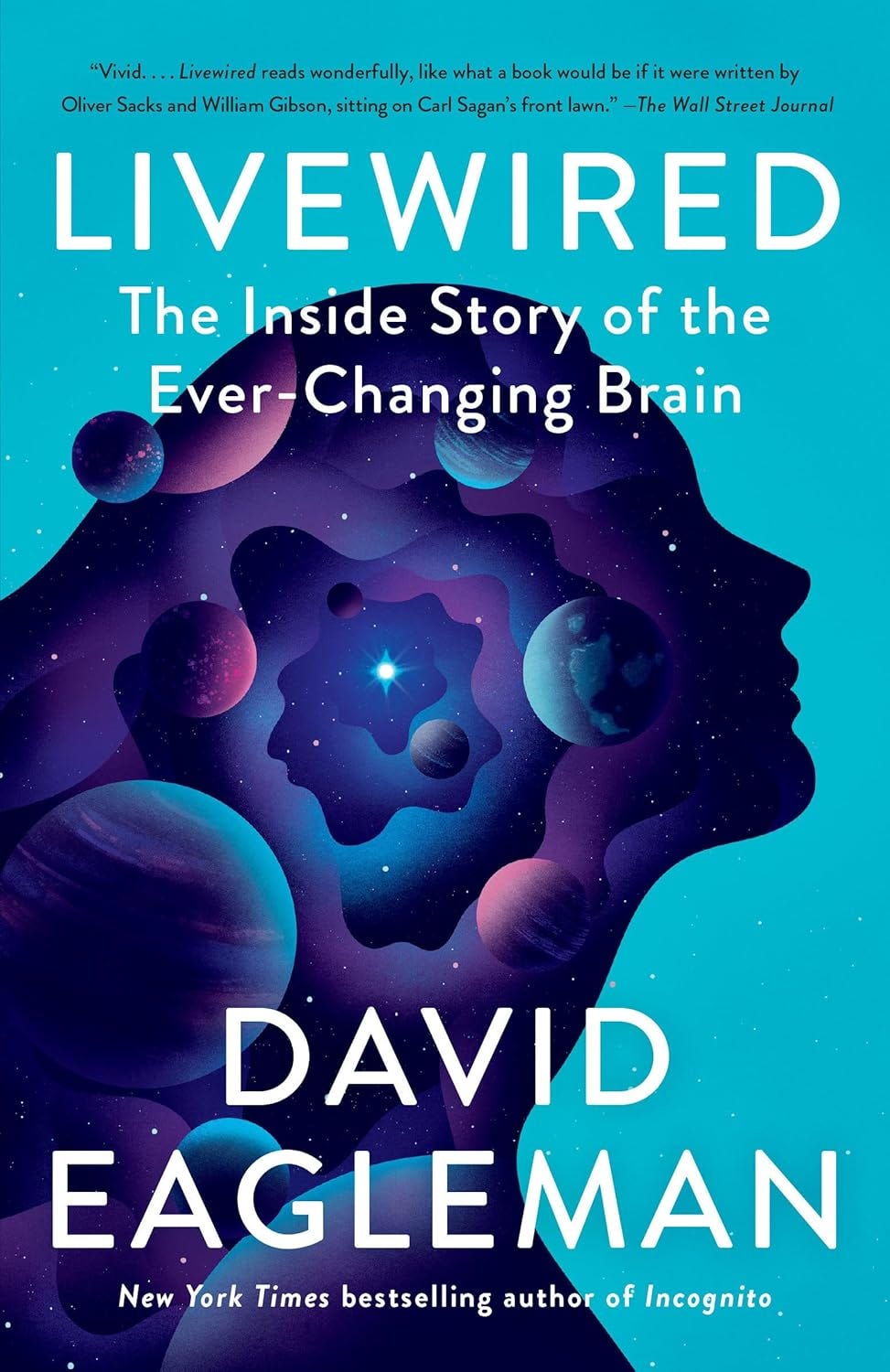
Last week, my dad and I got to have a lengthy conversation with neuroscientist David Eagleman about his research on the brain, shared most recently in his book Livewired. Eagleman is a prolific researcher and writer, but is most known for his work on the idea that the brain adapts in marvelous ways throughout the entirety of our lives, especially under appropriate challenge and stress.
With all the focus in recent years on trauma and nervous system regulation, it’s easy to come away with the conclusion that stress is bad, and the goal is to feel as little of it as possible. Consequently, we often try to engineer the stress out of our lives, or, at least, feel we should, or risk our physical and mental health.
But I think this is only half of the story.
Yes, trauma exists, but trauma and stress are not the same. And conflating the two gives stress a bad name, when it can actually be beneficial.
Both stress and trauma are uncomfortable, often profoundly so—even painful. The consensus among psychologists is that the severity of the experience doesn’t define trauma, but the way someone experiences the inciting event does. That’s why two people can have the same experience and one can experience it as stress and another as trauma.
The difference lies in whether the nervous system’s capacity is overwhelmed or challenged. An overwhelmed nervous system stays stuck in fight, flight, or freeze. The memories are encoded in the body and senses rather than in a coherent narrative as they are in stress.
Conversely, when a nervous system is stressed but not overwhelmed, it naturally returns to equilibrium with rest, talking things through, and so on. Meanwhile, trauma is a different animal. Those experiences rarely respond to either rest or talking and, instead, must be integrated into the memory through somatic and sensorial therapeutic modalities.
Trauma Inflation
As our culture has become increasingly aware of trauma and the way the nervous system works, I think we’ve fallen into a kind of “trauma inflation.” What we used to call “stress” is now dubbed “trauma”—including minor accidents, difficult conversations at work, or heated political conversations—when in reality, these are normal life stressors. It’s almost become a default response, then, to code anything that pushes us past our limits as being dangerous to our nervous systems, physical and mental health, and brain functioning.
But that’s not what the neurological research says.
According to Eagleman, stress makes our brains stronger if it is the right kind. At the risk of oversimplification of his work, the brain actually thrives on novel challenges, especially in midlife.
It kind of makes sense. After all, without friction, without challenges, and, yes, without stress, we atrophy. Think about your body for a second. If you sit all day long, or worse, lay in bed, you quickly lose muscle and strength. If you do it too long, you’ll find yourself wholly incapacitated. I’m watching this play out in stark terms with my mother-in-law, as she’s been bed-bound in a hospital for over a month and faces an uncertain and difficult recovery due to her loss of function from inaction.
During our conversation with Eagleman, we asked him what midlife professionals can expect to happen to their brains in this period of history with so many internal and external stressors in play like never before.
After all, the AI revolution alone will cause most of us to totally remake our jobs in the next 3–5 years, if not enter jobs or industries that don’t even exist right now—all at the precise moment we thought all of our years of professional hard work would have paid off and we’d be reaping the rewards of paying our dues in decades past. It is not to be.
That is to say nothing of the challenges of our changing bodies, aging parents, and kids still at home, not to mention tremendous global, economic, and political uncertainty and upheaval.
If we aren’t careful, we can start to believe we drew the short straw to live in these “interesting times.” But there’s another perspective.
A Gift in Disguise
Eagleman told us that he has a theory that we will see a marked drop in dementia for those going through middle age now compared to the previous generations. Why? Because the best thing you can do to preserve the function of your brain later in life is to constantly expose it to novel challenges.
One of the greatest hidden benefits of the AI revolution and the general uncertainty of our moment may, ironically, be the preservation of the human brain itself as we struggle to adapt and learn new ways of thinking and being in an ever-changing landscape.
So, while it is certainly unsettling not to be able to predict what the next few years will look like (our brain’s primary function is prediction as a means of keeping us safe, after all), that may turn out to be a gift in disguise.
While I think we can all bet the years ahead will be full of discomfort, and yes, even pain in some cases, they may very well also create the preconditions necessary for our brains to become something they never would have if the status quo were to prevail.
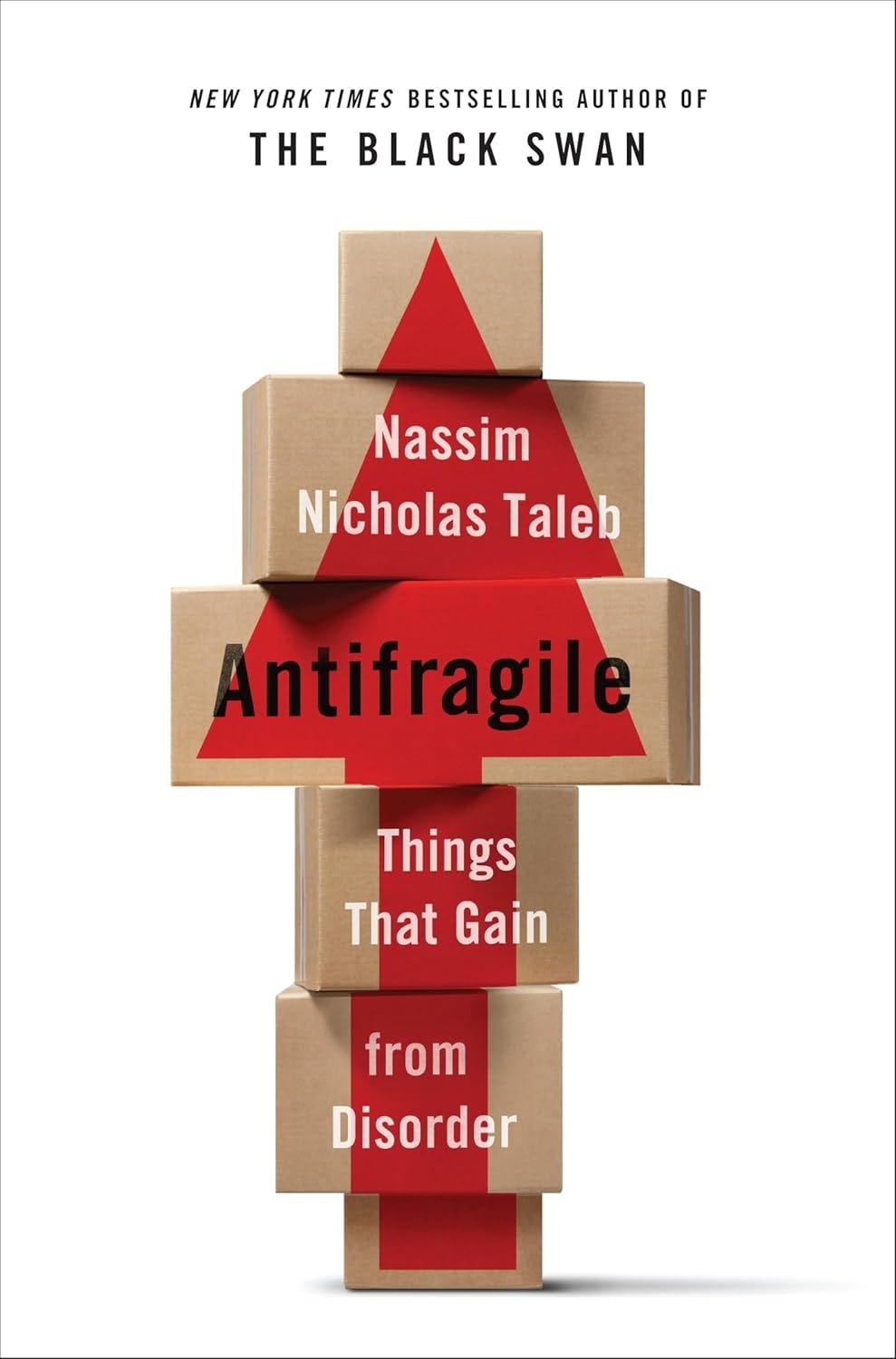
This also reminds me of the counterintuitive thesis of Nassim Nicholas Taleb’s book Antifragile, where he argues that our lives and contributions are actually enhanced by difficulty and challenge, not broken down by them.
Antifragility
In his book, Taleb presents three responses to “shocks,” as he calls them (we are certainly in the midst of a “shock” right now, aren’t we?):
1. Fragility. Belief: Volatility is a threat. It is dangerous. It will break me.
This is the “stress = trauma” approach that I described above. This is going to be a debilitating mindset in the years ahead, because the volatility and shockwaves we are experiencing now are only going to become more intense. We can’t hold back the tide of the future, but if we embrace fragility, we’ll sink instead of swim. Instead, we’ve got to become astute at distinguishing the difference between discomfort—even extreme discomfort with all the new, all that we don’t understand, all that it will require of us—and genuine trauma. They are not the same.
2. Resilience. Belief: I am unaffected by volatility. I am a rock, or I bend, but I don’t break.
True confession. I thought this was the goal for most of my adult life. To encounter setbacks and bounce back to baseline. To be unaffected by difficulty as much as humanly possible. I would even have said recently, “This is what I’m good at!” But the truth is, resilience stops short of what’s possible. I don’t want to simply encounter hard things and go back to where I was. If that’s the model, then what we are really talking about is nothing more than “live to fight another day”—survival.
3. Antifragility. Belief: I am shaped and improved by volatility and difficulty.
Taleb, like Eagleman, believes that our best path forward is to run toward the volatility and difficulty because they are actually good for us. Not only because there really isn’t any other option, but because in doing so, it will make us stronger, more capable, and unlock potential for creativity and innovation that otherwise would be inaccessible. To survive (and thrive) in the years ahead, I believe this is the only viable position to take, ready or not. And if there’s one thing humanity is going to need to navigate the challenges and opportunities that await us, it’s our creativity and ability to innovate. In fact, the future depends on it.
So, if stress is unavoidable, not inherently dangerous, and even beneficial to us, how should we live with it well?
Accept the Reality of Your Life
What is one thing that all people who successfully recover from addiction have in common? They have learned how to accept the reality of their life without trying to escape from it. We would do well to adopt the same relationship to reality.
I believe most of our suffering comes from resisting reality. Trying to “not know what we know.” Fighting what is and wishing for a choice set that isn’t on the table instead of choosing well between the choices that are actually given to us. All of this is an attempt to avoid discomfort or pain, usually under the misbelief that we can’t handle reality. But in reality, we can handle a lot more than we think.
As I’ve learned through my own experience in therapy and as a long-time coach to business owners and CEOs, most good therapy or good coaching is exposure therapy. Doing the thing you fear. Leaning into the challenge you don’t want to face. Stepping way outside your comfort zone and realizing it won’t kill you after all. There’s no way out except through, and the sooner you and I reconcile ourselves to that, the easier life gets.
Allow Fear to Coexist with Courage
This is a big one for me. If I’m honest, I would tell you I hate the feeling of stress and anxiety. I don’t like how it feels in my body or my mind. It reminds me of when I was working to overcome my fear of public speaking. I used to interpret those pre-stage physical sensations of sweaty palms, shallow breathing, buzzy head, and queasy stomach as “I’m about to do something that might kill me.” After testing this when giving my first keynote to 800 people back in 2018, I finally realized it wouldn’t (talk about exposure therapy!).
Now I know that’s just adrenaline, and I remind myself that it’s a normal part of preparing to speak. In fact, the adrenaline makes me better. It keeps me from panicking and enables me to do what I need to do. The same is true for life.
The speaking anxiety coach I worked with told me, “You can feel the fear, and you can stop trying to make it go away, but you have to get to work anyway.” Meaning, I had to step on stage, even if it meant taking my fear with me, like a motorcycle driver with a sidecar. My fear didn’t get to drive, but it could come along if it had to.
I’ve got a free, new live training I’m hosting this coming Tuesday, May 26: “The 3 Cuts I Made To Get Back 10 Hours Every Week.” If you’re a busy professional ready to stop carrying so much and get real time back without losing the results you’ve worked hard to build, this is for you.
I think this is a great way to approach life. It’s unrealistic to think we won’t feel fear or that we’ll be able to maintain internal calm under all circumstances. We won’t. That’s where courage comes in. It wouldn’t be brave if we weren’t scared, and courage is essentially doing the thing you’re scared of without resolving the fear first.
Be a Good Steward
When faced with circumstances that provoke a stress response that we don’t enjoy, whether due to discomfort, uncertainty, or loss, part of our agency is to steward those moments well. We can do that by remembering that there are gifts hidden inside the “hard.” Opportunities for learning new things, discovering new parts of ourselves, connecting and collaborating with others, and so on—all of which are profoundly generative for our brains, especially in midlife. So let’s not waste the hard times if they’re going to happen anyway. Let’s milk them for all they’re worth.
Anchor Ourselves to What Doesn’t Change
Navigating stress is more than just leaning in, though. A key strategy to employ during stress (which, in my experience, is about 50 percent of any normal person’s life) is to purposefully anchor to things that are stabilizing and grounding. These things reassure our brains that they are safe and create the conditions for flourishing in the midst of any season, regardless of how stressful.
For me, this is always analog and multi-sensory, often including getting outdoors in nature and moving, but can also look like a nourishing meal, a challenging strength training session, a glass of wine with a friend, or time in prayer or worship.
Incorporate Intentional Rest
Last but not least, if we are going to go the distance as we live in the midst of stressful times, as we all do for a variety of reasons, we have to rest. Our humanity requires that we get sufficient sleep and take physical breaks—the sustainability of any intense season depends on it.
That’s why, for me, my most foundational activity of tending to myself is sleep, before nutrition, exercise, and so on. Without sleep, my “resourcefulness,” as my mom calls it, is greatly diminished. My decision-making, creativity, and capacity for tolerating uncomfortable emotions or sensations is so much better on a full night of sleep.
So, while much of life is beyond our control, and the context we find ourselves in is sure to challenge us in ways we may never have expected, it’s not all bad news. In fact, it may be very good news for our brains, bodies, and our potential for contribution in the world if we understand it properly and commit ourselves to acting with courage and leaning into the discomfort, come what may.
What about you? Where in your life are you being asked to grow through the hard right now? And what’s helping you lean in, instead of simply brace against it?
Last modified on May 26th, 2026 at 2:31 pm
Disclosure of Material Connection: Some of the links in the post above are "affiliate links." This means if you click on the link and purchase the item, we will receive an affiliate commission. Regardless, we only recommend products or services we use and believe will add value to our readers. We are disclosing this in accordance with the Federal Trade Commission's 16 CFR, Part 255: "Guides Concerning the Use of Endorsements and Testimonials in Advertising.